Key Takeaway
STP plants are mandatory for apartments generating more than 10 KLD of sewage in Chennai as per TNPCB regulations. An STP system costs ₹5–50 lakh depending on capacity and technology, and helps apartments save 30–40% on water costs by recycling treated water for flushing and landscaping.
With Chennai's growing urbanization and increasing water scarcity, sewage treatment plants (STP) have become an essential infrastructure component for apartment complexes. Beyond regulatory compliance, STPs offer significant economic and environmental benefits to residential communities.
What Is an STP Plant?
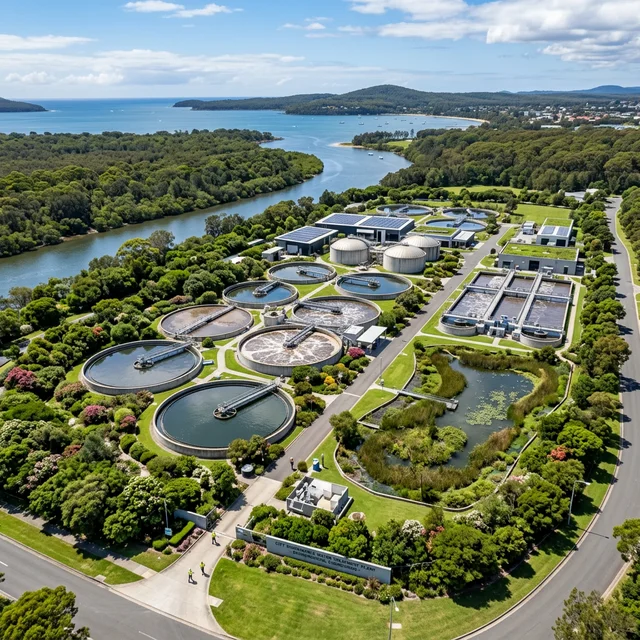
A Sewage Treatment Plant (STP) is a facility that treats wastewater generated from toilets, bathrooms, kitchens, and laundry in residential buildings. The treatment process removes organic matter, suspended solids, and harmful pathogens to produce reusable quality water that meets TNPCB discharge standards.
STPs typically achieve BOD (Biochemical Oxygen Demand) levels below 10 mg/L and TSS (Total Suspended Solids) below 10 mg/L in the treated water, making it suitable for non-potable reuse applications.
TNPCB Regulations for Apartments
The Tamil Nadu Pollution Control Board has established clear regulations regarding STP requirements for residential buildings in Chennai:
- Mandatory threshold — STP is required for buildings generating more than 10 KLD (kilolitres per day) of sewage
- Building size criteria — Apartments with more than 20 dwelling units must install STP
- Plot area criteria — Buildings on plots larger than 2,000 sq ft require STP
- Consent to operate — Apartments must obtain CTO (Consent to Operate) from TNPCB annually
- Treated water reuse — At least 50% of treated water must be reused within the premises
- No discharge to drains — Untreated sewage discharge to storm water drains is strictly prohibited
Penalty Warning
Non-compliance with TNPCB STP regulations can result in closure orders, fines up to ₹1 lakh per day, and disconnection of water and electricity supply. Regular compliance audits are conducted by TNPCB officials.
Types of STP Technologies for Apartments
1. SBR (Sequential Batch Reactor)
SBR operates in batch mode with fill, react, settle, and draw phases in a single tank. It is cost-effective for medium-sized apartments (50–150 units) and produces good quality treated water with low maintenance requirements.
2. MBR (Membrane Bio Reactor)
MBR combines biological treatment with membrane filtration, producing the highest quality treated water. MBR systems require 40–50% less space than conventional systems, making them ideal for apartments with limited space.
3. MBBR (Moving Bed Biofilm Reactor)
MBBR uses plastic media carriers for biofilm growth, offering robust treatment capacity and shock load handling. It is well-suited for large apartment complexes (200+ units) requiring consistent performance.
4. Extended Aeration
A conventional technology using prolonged aeration for biological treatment. While simple to operate, it requires more space and energy than newer technologies.
| Technology | Space Required | Treated Water Quality | Cost (₹/KLD) | Best For |
|---|---|---|---|---|
| SBR | Medium | Good | ₹40,000–60,000 | 50–150 unit apartments |
| MBR | Low (40% less) | Excellent | ₹70,000–1,00,000 | Space-constrained buildings |
| MBBR | Medium | Very Good | ₹50,000–70,000 | Large complexes (200+) |
| Extended Aeration | High | Good | ₹30,000–50,000 | Budget-friendly option |
Benefits of Installing STP in Apartments
- Water cost savings — Reusing treated water for flushing and landscaping saves 30–40% of fresh water procurement costs
- Regulatory compliance — Avoid TNPCB penalties, closure orders, and legal complications
- Environmental responsibility — Prevent groundwater and surface water contamination
- Property value — Green-certified buildings with functional STP command 8–12% higher property values
- Water security — Reduce dependence on external water supply during scarcity periods
- Community health — Proper sewage treatment prevents mosquito breeding and disease transmission
STP Plant Cost for Apartments in Chennai
| Apartment Size | Capacity | Capital Cost (₹) | Monthly Operating Cost |
|---|---|---|---|
| 20–50 Units | 10–25 KLD | ₹5–10 Lakh | ₹8,000–15,000 |
| 50–100 Units | 25–50 KLD | ₹10–20 Lakh | ₹15,000–25,000 |
| 100–200 Units | 50–100 KLD | ₹20–35 Lakh | ₹25,000–40,000 |
| 200+ Units | 100+ KLD | ₹35–50+ Lakh | ₹40,000–70,000 |
STP Maintenance Requirements
- Daily — Check blower operation, aeration patterns, and treated water clarity
- Weekly — Monitor BOD, TSS, and pH levels; clean screens and grit chambers
- Monthly — Service blowers and pumps, check electrical connections, inspect diffusers
- Quarterly — Professional lab testing, sludge management, and comprehensive system audit
- Annually — Major overhaul, membrane replacement (MBR), and TNPCB compliance documentation
Frequently Asked Questions
Yes, as per TNPCB regulations, STP is mandatory for all residential buildings generating more than 10 KLD of sewage. This typically includes apartments with more than 20 dwelling units. Buildings must obtain CTO (Consent to Operate) from TNPCB annually and ensure at least 50% of treated water is reused within the premises.
STP cost ranges from ₹5–10 lakh for small apartments (20–50 units) to ₹35–50+ lakh for large complexes (200+ units). Cost depends on technology choice (SBR, MBR, MBBR), capacity, automation level, and civil work. Monthly operating costs range from ₹8,000 for small systems to ₹70,000 for large ones.
MBR technology is best for space-constrained apartments wanting superior treated water quality. SBR is cost-effective for medium-sized apartments (50–150 units). MBBR offers robust performance for large complexes. The best choice depends on available space, budget, treated water quality requirements, and planned reuse applications.
Yes, treated STP water can be safely reused for toilet flushing (saves 30–40% fresh water), landscaping, car washing, cooling towers, and construction. It should not be used for drinking, cooking, or bathing without additional treatment. TNPCB mandates at least 50% reuse of treated water within the premises.